Why Scene Awareness Matters for Fire and EMS Teams
Fire and EMS teams are trained to enter situations that are uncertain, urgent, and often uncontrolled. Overdose responses, medical calls, vehicle incidents, public facility calls, and shared living environments can all involve unknown substances or surfaces that require caution.
In these situations, responders are often balancing two priorities at once: helping the patient and protecting the crew. That balance depends on training, PPE, communication, and the ability to recognize when a scene may involve additional hazards.
Public health and occupational safety guidance continues to emphasize the importance of work practices and PPE when illicit drugs may be present. Responders are encouraged to avoid unnecessary contact with unknown substances, use appropriate protective equipment, and follow established procedures for handling potential contamination.
Surface uncertainty can complicate the response. Equipment, stretchers, gloves, clothing, bags, countertops, vehicle interiors, and other surfaces may become part of the safety conversation after a call.
Presumptive surface detection can help support that conversation. It gives teams a way to gather more information when potential fentanyl contamination is suspected, while still relying on agency protocols and trained decision-making.
A presumptive tool is not a cleanup product, a substitute for PPE, or a guarantee of safety. It is one part of a broader approach to risk mitigation.
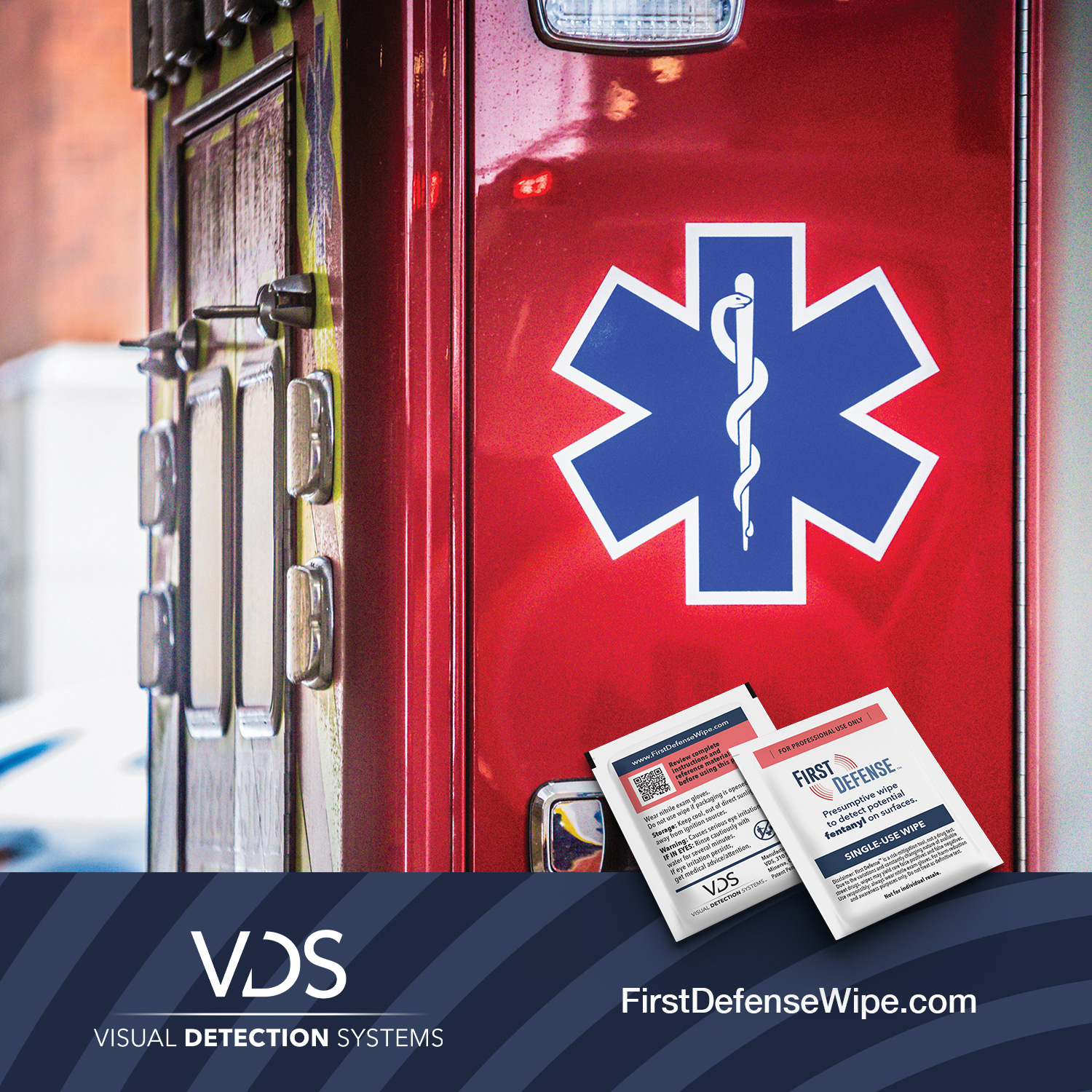
For fire and EMS teams looking to add another practical step to their safety process, First Defense™ Wipes offer professional-use presumptive fentanyl surface detection for field environments.